
· by Michael Blair, Nashville's Sunrooms
A sunroom is a glass box, and glass admits solar heat efficiently. In Middle Tennessee that is a benefit for a few months and a serious problem for several others, and orientation is the biggest single factor.
Orientation decides most of it
South-facing gives good winter sun at a high summer angle that overhangs can block. North-facing is the coolest and gets the least direct gain.
West is the difficult one: low afternoon sun straight through the glass in the hottest part of a Nashville day, and overhangs cannot block a low angle.
What glass keeps a sunroom cooler?
The number that matters here is solar heat gain coefficient, not just U-factor. Our cooling season is long, so rejecting solar gain matters more than in a heating-dominated climate.
Low-E coatings tuned for solar control make a large difference on west and south glass, and roof glazing should be specified more conservatively still.
- Prefer north or east where the site allows
- Low SHGC glazing on west and south elevations
- Insulated roof rather than glass roof in this climate
- Overhangs and exterior shading beat interior blinds
- A ceiling fan makes a substantial difference
The glass roof question
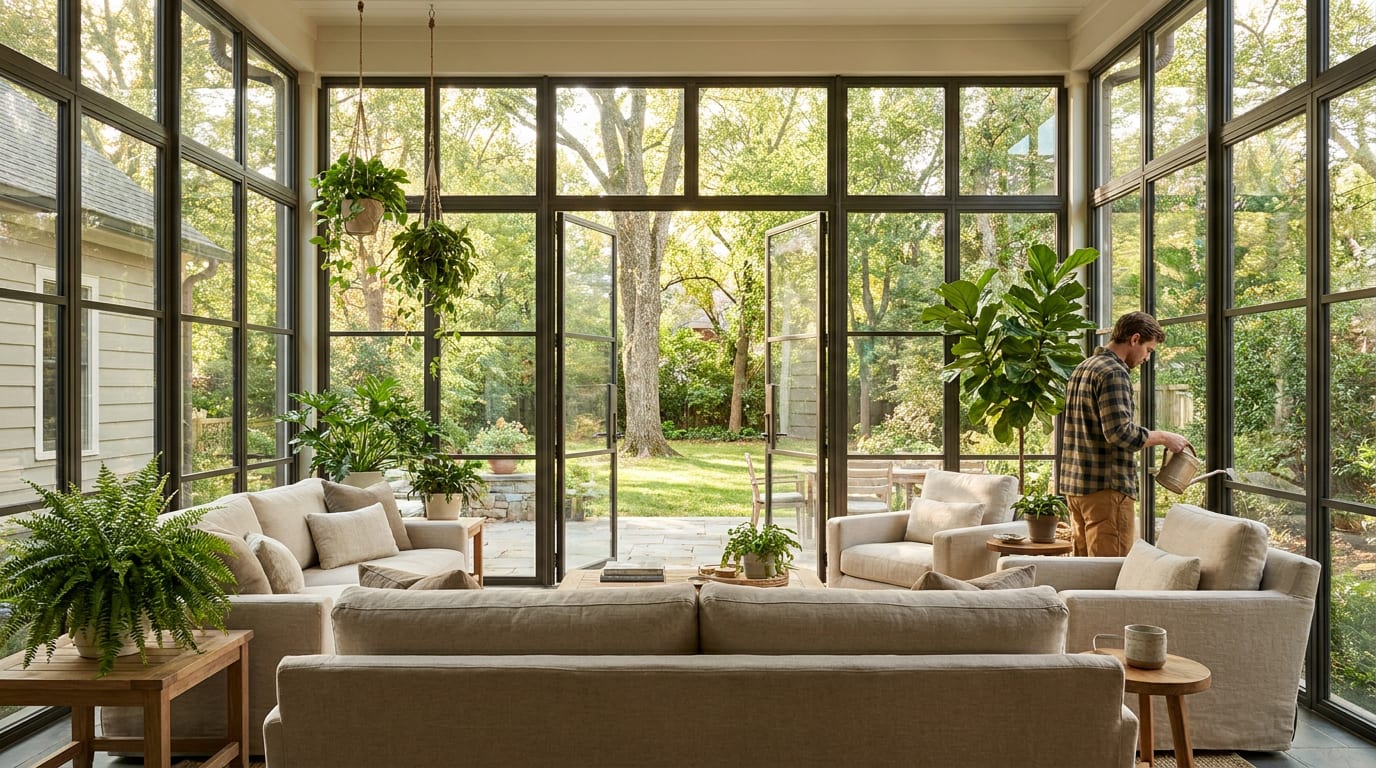
A glass roof is the most dramatic option and the hardest to live with here. Roof glazing takes the sun at its most intense angle in summer and there is no practical way to shade it from outside.
An insulated solid roof with skylights gives much of the light with a fraction of the heat.
How do you cool an existing sunroom?
Exterior shading — an awning, a pergola, planting — works far better than interior blinds, because it stops the heat before it is through the glass.
Applied window film reduces gain measurably and is the cheapest retrofit. A ceiling fan and a dedicated mini-split make the difference between a room used sometimes and one used often.
FAQ
Stopping a Sunroom From Becoming an Oven — questions
Which direction should a sunroom face in Nashville?
North or east where the site allows — north is coolest and most consistently usable, east gives morning sun and afternoon shade. West is the hardest, taking low intense afternoon sun that overhangs cannot block. If west is unavoidable, glazing specification and exterior shading become critical rather than optional.
Is a glass roof a good idea here?
It is the hardest option to live with in Middle Tennessee. Roof glazing takes the summer sun at its most intense angle and cannot be shaded from outside. An insulated roof with well-placed skylights delivers most of the light with a small fraction of the heat gain.
Does window film help an existing sunroom?
Measurably, and it is the cheapest retrofit available. It reduces solar gain and glare without structural change. Exterior shading works better still because it stops the heat before it reaches the glass, but film is a reasonable first step where an awning is not practical.
Do insulated roof panels keep a sunroom cooler?
Yes. An insulated solid roof blocks the summer sun at its most intense angle, which a glass roof cannot be shaded against from outside. Add a few well-placed skylights and the room keeps much of its light with a small fraction of the heat, which in a Nashville summer is the trade most owners want.