
· by Michael Blair, Nashville's Sunrooms
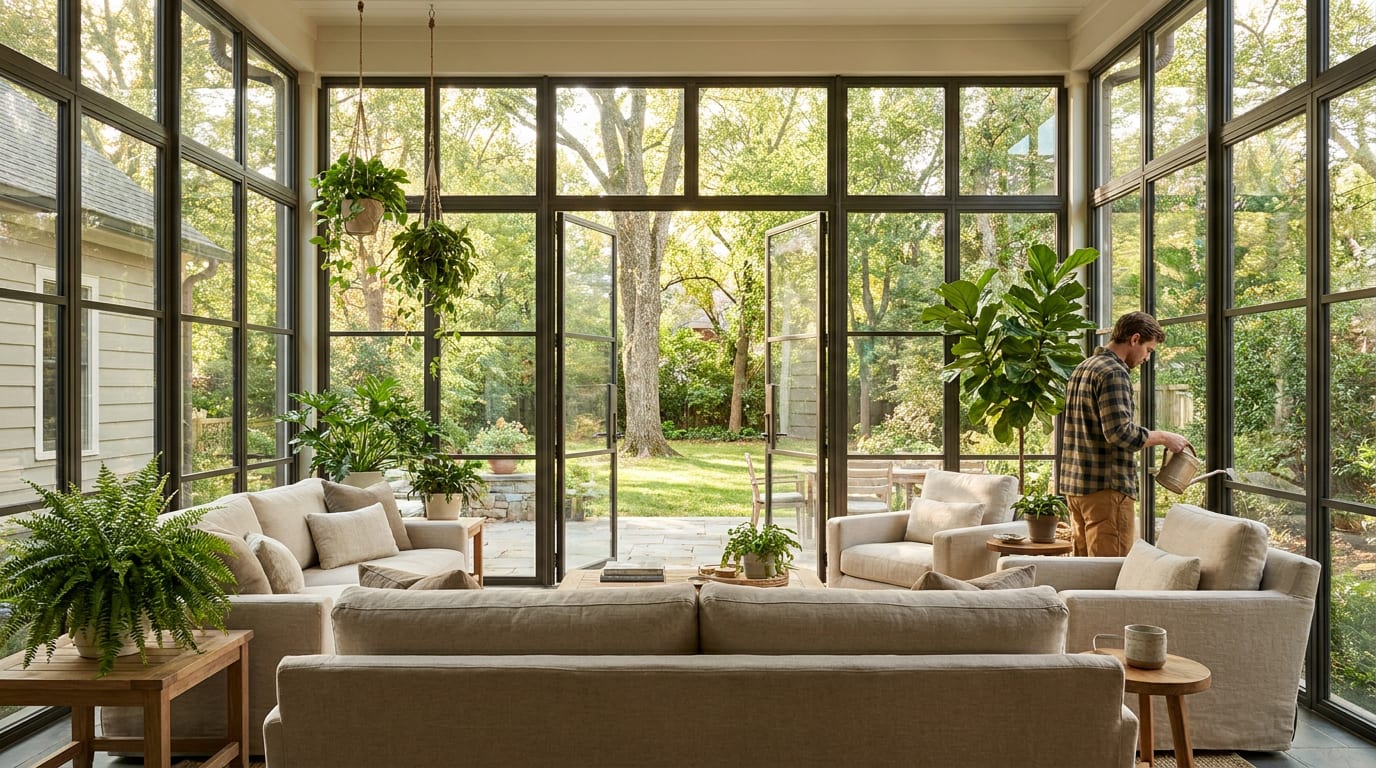
Sunrooms are among the most commonly underused rooms in a house. When one fails it is rarely the construction — it is that the room is too hot, too far from where life happens, or furnished for a magazine rather than for sitting in.
Where should a sunroom sit in the house?
A sunroom off the kitchen or the main living space gets used daily. One reached through a bedroom or at the end of the house becomes a route to somewhere rather than a destination.
That is often decided by where the existing door is, which is worth challenging rather than accepting.
Why does temperature decide whether it gets used?
In Middle Tennessee, a room that is unbearable from June to September and cold from December to February is usable for perhaps five months. Conditioning, shading and a ceiling fan extend that substantially.
A dedicated mini-split is the single most effective addition to an existing sunroom.
- Site it off the kitchen or main living space where possible
- A ceiling fan, always
- Dedicated conditioning rather than extended ductwork
- Fade-resistant fabrics and finishes
- Blinds or shades on the west glass
Furnishing for the light
Direct sun fades fabric, timber and artwork quickly through glass. Solution-dyed acrylics and performance fabrics hold up; ordinary upholstery does not.
Timber floors fade unevenly where furniture sits. Tile, LVP and stone all handle it better.
Blinds and privacy
Plan for shading at construction rather than afterwards, since sunroom glazing often has awkward head details and sloped sections that standard blinds do not suit.
Cellular shades handle both privacy and a useful amount of thermal control, which matters more here than in a milder climate.
FAQ
Making a Sunroom a Room You Actually Use — questions
What flooring works best in a sunroom?
Tile, stone or good quality LVP, all of which tolerate temperature swings, direct sun and the occasional wet foot. Solid hardwood fades unevenly under direct sun and moves with the humidity swing a sunroom experiences, which is wider than the rest of the house.
Will my furniture fade in a sunroom?
Ordinary upholstery, yes, and faster than most people expect through unshaded glass. Solution-dyed acrylic and performance fabrics hold color far better. Low-E glazing reduces the ultraviolet component substantially, and shades on the west-facing glass do the rest.
Why do so many sunrooms end up as storage?
Almost always temperature or location. A room unbearable for four months of a Middle Tennessee year and cold for two more is usable less than half the time, and one reached only through a bedroom or at the far end of the house never becomes part of daily life. Both are decisions made at design stage.
What furniture is best for a sunroom?
Pieces upholstered in solution-dyed acrylic or performance fabrics, because direct sun through glass fades ordinary upholstery and wood quickly. Choose real, comfortable furniture sized for sitting rather than a magazine look, leave room for it in the plan, and pair it with shades on the west glass to slow the fading.